Sunday, October 25, 2020

Adena, Colorado


Adena, Colo.


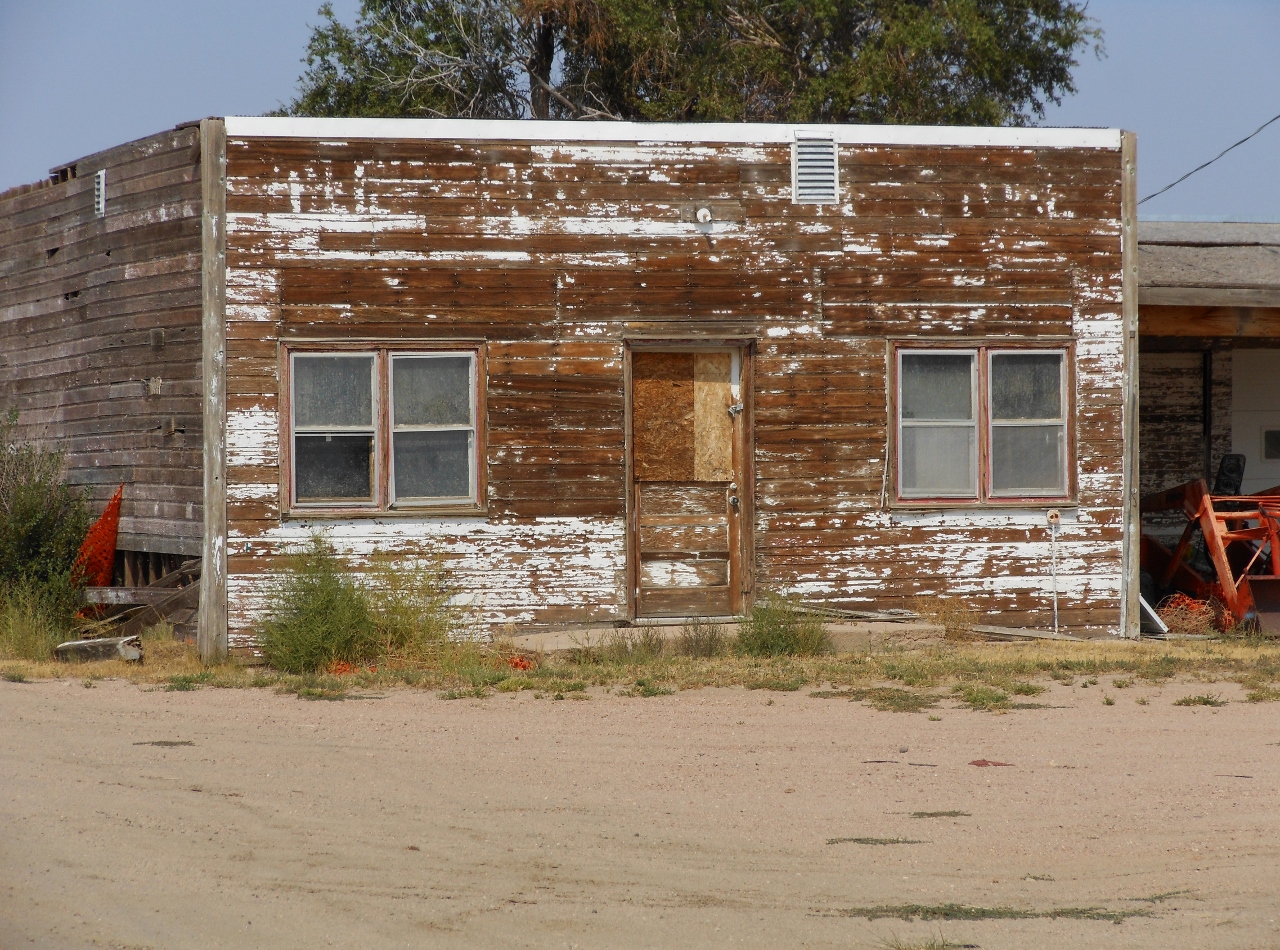
The farming community of Adena, is located along the southern edge of Morgan County.  Not much can be found about this community but one can speculate based on similar places. 


Located on the banks of a small creek, there is not much left.  The one room school still stands and there are footers/foundations in the weeds and rubble.  The name Adena probably came from the settler that first had the post office contract for the area. 


From this small rural post office, the community probably grew.  The nearest town of any size is if about 30 miles away or better.  Besides the school, Adena probably had a general store to accommodate the post office.  May have been a blacksmith and when the autos showed up a gas station. 


Often there would be a community barn for hosting social events, card parties, dances, quilting bee’s… etc. To the north, about 3-4 miles, is the Adena community church, out back is small graveyard. 


Being along side of a creek, means it was downhill in the morning for the students.  In the afternoon, for the return walk home it was uphill.  Unless you home was downstream on the same creek. 


The farmers plow around the area where the community had been.  There are a few trees there plus the rubble.  The school will stand until it tumbles for it is not taxed.  The one room school had a few additions over the years.  The one room is now a two room.  So there was provably good sized settlement in the area at one time. 


Today the breezes float over the land, giving the birds currents to glide on. 


Sunday, October 4, 2020

Hoyt Colorado... Twice


Hoyt

Mom’s town

&

Sonnies


Hoyt, Colorado is a tale of two towns.  One in Kit Carson County, the other in Morgan County, the most familiar one. 


Doctor Hoyt was an enterprising gentleman, He developed two towns, neither really survived.  The one in Kit Carson County was built along the Hugo Wagon Road in the Republican River valley.  This town he named after himself, according to stories.  Doctor Hoyt’s town did not last very long.  The railroad came through to the south of town.  The townspeople wanted to be next to the rails.  So they picked up their town and moved it south a few miles. 


Meeting disappointment, Dr. Hoyt moved on, to the north.  In Morgan County, the ambitious doctor started another town, this one he named after his mother, Mrs. Hoyt, It appears the Mrs. was dropped.  According to stories, this Hoyt was established in 1904.  So a second Hoyt came into existence, it appears to of existed for a time.


Today Hoyt is an unincorporated village in the Platte Valley.  It is an assortment of neglected homes and farms.  There are still a few residents that call Hoyt home.  For well weathered building, Hoyt is a good place, for they have an extensive collection of old weathered stuff.


The other Hoyt is pretty vacant, there are footers and foundations that remind folks there were building there.  First Hoyt sits in private property, just off Hwy 59.


One thing, Hoyt’s name lives on. 


Sunday, September 27, 2020

Yesterday's School


School

In The Country


Scattered across the high plains of Colorado are variety of old country schools.  A few have survived and are still sitting on their spot.  Others have moved and have new uses.  This school appears to be sitting on its original spot and worse for wear.  Time and the elements are slowly bringing it back to nature. 


School districts were usually based on a township, 36 sections, one section set aside as school land.  Most school land was pasture land and the monies from its lease went to the school district.  That is probably why the building is still standing, it is not a tax liability.  It was probably built around 1915, plus or minus a few years. 


When it was constructed, there were few more folks in the area then today.  There were usually one family per half section but not all homesteaders made, had to sell out and move on.  That still would have left about 30 families in the district.   At the road intersection there could have been three families at the corner and more within a mile or two. 


What would of it been like to go to school here, more then a hundred years ago.  There would be no buses back then, so walking was the transport mode.  Maybe ride the horse bareback down to the fence and walk rest of the way.  Listen to the coyotes as you walk along, the distinct odor of the polecat, sidestep the rattler or maybe sing with the birds.   The winter all bundled up, trudge over the prairie, leaning into the wind, books tightly gripped.  There would have been path across the pasture or around the fields.  Look at the background of the picture and take a mile and half walk across the land.


There were no lunchrooms, so lunch was what the kids carried. Using a lard pail or wrapped in a cloth.  Food was homemade, nothing store bought.  There were no thermos bottles back then, so water or kool aid was the drink, often from a canteen. 


Mom and dad probably had not gone to school so homework the parents were learning with their children.  Often story time was one of the youngsters reading for the parents could not.  By the time the first one was in the 6th grade, mom and dad were usually pretty good readers and good at arithmetic.  Sixth grade was the graduation for most boys, a few girls went on to 6th.  The boys were to help dad with the farmwork.  With busses, the children could go into town and finish high school.  Most of the farm boys in WWII had only a sixth grade education. 


Sounds harsh, yet these youngsters survived and went on to be grandparents. 


Saturday, September 12, 2020

Shamrock


Shamrock Colorado


Located at the far eastern end of 104th ave, the town of Shamrock has almost disappeared.  The county has a road shop there and that pretty much keeps the little town on the map. 

When I went through the area years ago, there were a few buildings still standing.  Today, a schoolhouse is still there, the county building and a couple of homes.  The one room school is gone as are the other stores. 


The school house that still stands, appears to be a storage shed and well maintained.  Even the flag pole was in use, displaying Old Glory. 

South of the town is a WWII memorial, in the empty field.  During WWII a bomber training flight from Lowery crashed in the field.  A Memorial was built and dedicated to the crew of the crashed bomber.  It appears to have a caretaker, the flags are replaced and ground, cared for. 


Friday, August 21, 2020

Prairie Ghost town


Vona, Colorado


            Across the plains of eastern Colorado are many little burgs that are slowly settling in to dusty memories.  Early 1900 through the 1920’s these little towns were in their heyday.  Main street was a busy place with shops and stores in downtown.  Buggies and the new fangled horseless carriage shared the main avenue.  Then the great depression hit the country and life on the prairie would change for the depression ushered in the dust bowl.  What had once been prosperous land became pile of blowing dust.  No longer could folks pay their debts, banks foreclosed and people lost their livelihood. Life had evolved into a desperate situation of trying to survive. 

            Vona was located along the railroad line of the Rock Island.  When the homestead law changed, the little town of Vona was ready for the new settlers.  The railroad brought supplies and product was shipped via the railway.  Vona became a thriving farm town on the high plains.  A town government was formed and utilities were placed.  A school was built and into the 20th century Vona moved. 

            After the dirty 30, dreams began to fade and with the drought of the 50’s many sold out and moved on.  The dream of a country town began to fade into the murky recess of dreams lost. 

            Today Vona is home to a few dozen residents, but most of the business have closed up and moved on.  The Post Office is still open as is town hall to manage the utilities and streets.  City park is across the street from town hall and is maintained. 


            During the 60’s, Interstate 70 was under construction it completely by passed the little town.  The building of the Interstate was the knell of demise.  On the old highway, the gas station hung on until the caretakers could no longer manage.  The grain elevator shuttered up a couple of years earlier.  Across the corner is the junk dealer in the gulley with appliances strewn about awaiting the fate to the scrap pile. 

            Mani street has a few buildings, most are empty and store a variety of stuff.  One of the empty buildings had goats in a pen beside it.  Mostly the winds of past times float across the roofs whistling. 


            On a knoll overlooking the town is the water tower.  One of the more unique towers and probably one of the smallest tanks ever.  Next to it is a large steel tank, possibly auxiliary supply and behind is the new replacement water tower.  The old water tower was designated a historic land mark because of its uniqueness. 

            There are the few who still live in Vona, it is a quiet village, where people still go about life.


Sunday, August 9, 2020

Church Community


Shiloh


Shiloh was a small church community located in the Northwest section of Kit Carson County, CO.  The church still stands, in serious neglect and appears to of been abandoned more then 50 years ago.  Out behind is the graveyard, again neglected.  Weeds hide the markers and critters burrow here and there. 

It appears no descendents from the community still live in the area.  Steel pipes mark the edges of the graveyard to keep the farm from encroaching. 

The prairie winds flow unfettered thorough the roof and open windows.  Having withstood the elements over the decades the little tattered building is a reminder, when dreams and hopes filled the land.  Whispering winds filter through the open boards, rustling the memories of other times. 


Old farm machinery resides in the side yard
Old wooden plaster lath is revealed as time takes its toll on the church.

The out house has gone to rest in its repository.  


Saturday, July 25, 2020

RR Stop ... Kipling Colorado


Kipling, Colorado

          Kipling was a wannabe RR town, where not much happened.  When the Chicago Rock Island and Pacific built to the Rocky Mountain goldfields, it was also building towns along the way.  These little villages would become customers of the railroad and also provide a place for maintenance crews. 

          When Kipling was platted out, that was the purpose.  A section crew and control point.  A siding was put in along with a depot and control signals.  There probably was also a couple of house built for the RR crews to live in. 

          Kipling is located on the eastern banks of the Republican River, overlooking the valley.  There was a trading post down in the valley that wanted the railroad to stop there but stopping at the bottom of a hill is not what they want to do.  So the Rock Island put their stop on top of the hill.


          With the passing siding at Kipling, EB trains could build up extra steam for their run across the valley, Highball down hill and have enough momentum to easily climb up to the other side.  WB trains could pull into the siding and await the high flying EB. 

Today, there are not much of any reminders that there had been a little spot on the rails.  The signal lights lay in the weeds along side the rails and there is a country grade crossing of the rails. Traffic noise from the nearby Interstate rolls over the land, blending with the prairie breezes. 

Markers from the dirty 30’s still remain alongside the RR ROW.  The snow fence that had been built to protect the tracks is now buried under drifts of blow dirt.   Posts partially peering out of the drifted dirt. 

Besides the railroad going through the area, the Indians lived in the valley for generations.  Later the French would show up and begin trading with the Indians.  This area was part of the Louisiana Purchase.  The Spanish also traveled along the river, spying or checking on their neighbors. 

Next was the wagon road to the gold in the Rockies and then the Leavenworth Stage line, traveled the valley, with a stage station just below the ridge.  It had been a busy area, with a wide assortment of travelers.  Today the train still trundles down the rails, four a week and the occasional local passes thru. 

Add caption