Showing posts with label ghost trails. Show all posts

Sunday, October 4, 2020

Hoyt Colorado... Twice


Hoyt

Mom’s town

&

Sonnies


Hoyt, Colorado is a tale of two towns.  One in Kit Carson County, the other in Morgan County, the most familiar one. 


Doctor Hoyt was an enterprising gentleman, He developed two towns, neither really survived.  The one in Kit Carson County was built along the Hugo Wagon Road in the Republican River valley.  This town he named after himself, according to stories.  Doctor Hoyt’s town did not last very long.  The railroad came through to the south of town.  The townspeople wanted to be next to the rails.  So they picked up their town and moved it south a few miles. 


Meeting disappointment, Dr. Hoyt moved on, to the north.  In Morgan County, the ambitious doctor started another town, this one he named after his mother, Mrs. Hoyt, It appears the Mrs. was dropped.  According to stories, this Hoyt was established in 1904.  So a second Hoyt came into existence, it appears to of existed for a time.


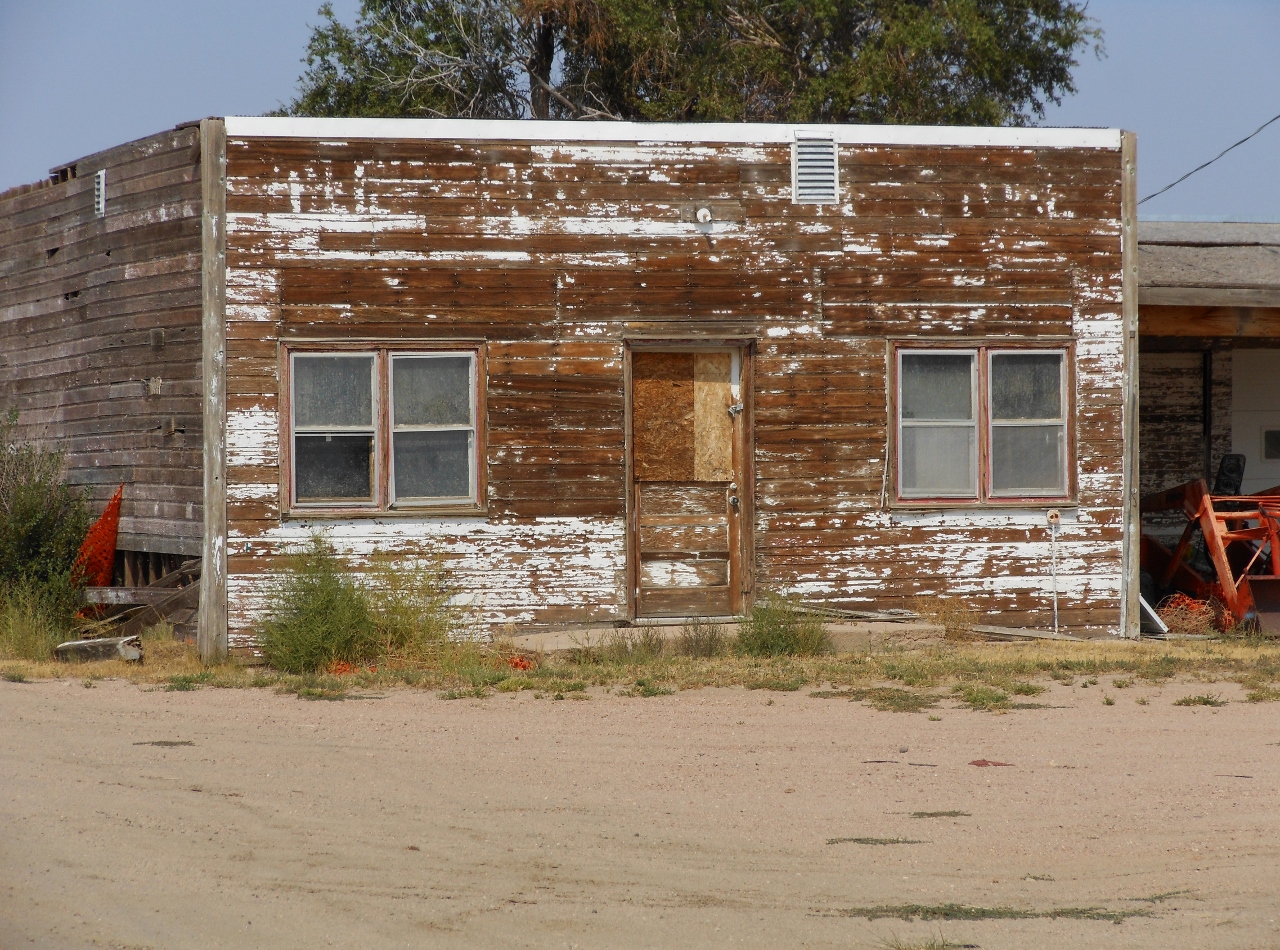
Today Hoyt is an unincorporated village in the Platte Valley.  It is an assortment of neglected homes and farms.  There are still a few residents that call Hoyt home.  For well weathered building, Hoyt is a good place, for they have an extensive collection of old weathered stuff.


The other Hoyt is pretty vacant, there are footers and foundations that remind folks there were building there.  First Hoyt sits in private property, just off Hwy 59.


One thing, Hoyt’s name lives on. 


Friday, August 21, 2020

Prairie Ghost town


Vona, Colorado


            Across the plains of eastern Colorado are many little burgs that are slowly settling in to dusty memories.  Early 1900 through the 1920’s these little towns were in their heyday.  Main street was a busy place with shops and stores in downtown.  Buggies and the new fangled horseless carriage shared the main avenue.  Then the great depression hit the country and life on the prairie would change for the depression ushered in the dust bowl.  What had once been prosperous land became pile of blowing dust.  No longer could folks pay their debts, banks foreclosed and people lost their livelihood. Life had evolved into a desperate situation of trying to survive. 

            Vona was located along the railroad line of the Rock Island.  When the homestead law changed, the little town of Vona was ready for the new settlers.  The railroad brought supplies and product was shipped via the railway.  Vona became a thriving farm town on the high plains.  A town government was formed and utilities were placed.  A school was built and into the 20th century Vona moved. 

            After the dirty 30, dreams began to fade and with the drought of the 50’s many sold out and moved on.  The dream of a country town began to fade into the murky recess of dreams lost. 

            Today Vona is home to a few dozen residents, but most of the business have closed up and moved on.  The Post Office is still open as is town hall to manage the utilities and streets.  City park is across the street from town hall and is maintained. 


            During the 60’s, Interstate 70 was under construction it completely by passed the little town.  The building of the Interstate was the knell of demise.  On the old highway, the gas station hung on until the caretakers could no longer manage.  The grain elevator shuttered up a couple of years earlier.  Across the corner is the junk dealer in the gulley with appliances strewn about awaiting the fate to the scrap pile. 

            Mani street has a few buildings, most are empty and store a variety of stuff.  One of the empty buildings had goats in a pen beside it.  Mostly the winds of past times float across the roofs whistling. 


            On a knoll overlooking the town is the water tower.  One of the more unique towers and probably one of the smallest tanks ever.  Next to it is a large steel tank, possibly auxiliary supply and behind is the new replacement water tower.  The old water tower was designated a historic land mark because of its uniqueness. 

            There are the few who still live in Vona, it is a quiet village, where people still go about life.


Sunday, December 8, 2019

Hidden gold treasure


Among the trees is where the spring is located.


The Lore
Of
Buried Gold

          As the legend goes, someplace near the ghost town of Clifford there is supposed to be buried gold. 
          It all begins in 1862 at Coon Springs in Eastern Colorado.  Coon springs was a stop along the Smoky Hill Trail.  Taking advantage of the springs and plentiful water an Army payroll detachment had stopped there. 
          Some outlaws jumped them and subdued the soldiers.  The outlaws got the payroll, reportedly over 100,000 dollars in gold. Mounting up the outlaws began their escape, heading out across the plains loaded down with the gold. 
          The outlaws did not do a very good job of tying up the soldiers for shortly after the thief’s had left, the soldiers were free and mounting their horses to give chase. Galloping across the prairie the soldiers were quickly gaining on the highwaymen. 
          Being loaded down with the gold the outlaws ducked into a gully.  They were going to bury the gold and return afterwards to retrieve their ill gotten gains.  Shortly after riding up out of the gully, the soldiers caught the bandits. 
          The bandits were taken to jail and sentenced to prison.  After their release, two of the outlaws were killed in gunfights and the third disappeared.
 There were stories of what happened to the gold and how the burial spots were marked.  With no more outlaws in the area, treasure hunters galore showed up to search for the buried gold.
There were never any reports of the gold being found but there were stories galore of finding marker stones.  These reports would fuel the gold fever even more.  Even today, there are folks that say the gold in still buried out there somewhere. 


Searching today is a problem, it is all private land and most folks in the area don’t like people roaming on their pastures.  That does not deter the treasure seekers.  They show up with their metal detectors and want to go hunting.  


Wednesday, August 7, 2019

The Bull that Could


Barnyard Memories
County Fair

One a year the Fair is the end of summer or the beginning of fall.  The projects from the year are put up for judging and viewing.  It is also a time for friends from around the county to renew their friendships. 
Then, there is the carnival and rodeo, the added bonus of the fair.  My father and uncle had a livestock hauling business and usually got the contract to haul the rodeo livestock in to town.  They would help work the animals and keep the rodeo moving along.  It was neat to sit in the bleachers and watch them prod and cajole the critters through their paces. 
For the most part the animals behaved pretty good.  Oh there was always a calf or two that wanted to go over there.  There was the bronco that had a two buck routine then would stop stiff legged and buck no more.  For the most part, things went smooth, steers ran, wrestlers jumped and riders found that the arena floor was not padded.
The bulls were at the end and when that portion came round, the tension rose some.  Could hear them kicking a bawling in the chutes.  The cowboys standing over them trying to get situated just right and out the gate the bull would come with a roar.  Clods flying, spinning bull, rider plowing the dirt, whistle blows and the bull gets rounded up.
There was one ole Brahma bull that wanted nothing to do with the rodeo rider.  Quick turn, high buck and the bull was sending the rider towards the fence.  Doubt it lasted 2 seconds.  The Brahma threw the belt and went for a joy ride across the arena.  The arena workers could not get him turned towards the pens.  Bull on a mission headed for the northeast corner of the arena. 
There the bull met the fence.  Dazed the bull backed up, jumped up, trying to crawl over the fence.   The cowboys were there, waving and hollering but the bull just kept kicking and bucking, slowly working his way up the fence.  The folks in the grandstand were excited and lots of oohs and ahhs were drifting overhead.  
Bull managed to get over the fence and into the runway.  The next fence was but another obstacle for the bull.  Leaping up, he got on the top railing and with some kicking.  The bull on the loose was climbing the second fence.  The cowboys all the time, hollering and waving at him with ropes etc.  The bull was not to be deterred.  It was like he had a girlfriend over yonder he hadn’t seen in a long time.
Across the race track ole bull galloped, coming to the grandstand fence at the southeast corner.   By then folks in the seats were scrambling and looking for safe spots.  The track fence only slowed the bull down long enough for the cowboys to get around the grandstand and try to stop the bull.
Up and over the rack track fence the bull scrambled.   Folks in the grandstand were scrambling also.  There were screeches, screams and lots of hollering.  The escaping bull paid no attention the commotion.  Straight ahead was the carnival and midway.   Folks on the midway and on the rides had heard the racket and when they saw the Brahma headed their way, the volume of hollering went roof. 
Bull saw an opening between the midway and the rides.  Head lowered, he went charging for the carny.  People running hither and yon, the barkers had ducked down in their trailers.   The rides had stopped, stranding riders.  Folks were running any direction they could.  The bull bound through the opening between the rides and the midway. 
Out into the parking he loped.   Cowboys running behind trying to get him stopped.  Some riders had made it out the parking but the bull was ignoring them.  Over there was another fence and beyond was the freedom of a pasture.  The barb wire fence was no challenge for the bull.  Up and over he went.  As he headed to the north, my uncle’s voice yelled out,” Let him go. That is my pasture, We’ll get him the morning.”
The chasers, with a collective sigh of relief, stopped and watched the bull bounce over the ridge.  With the ruckus over, they had to go back to arena and finish the rodeo.  There were still a couple of bull riders waiting their turn.  Folks in the grandstand had gotten back to their seats.  The crowd was still abuzz and there was anticipation with the next couple of bulls. 
The bulls came charging out the chutes, the crowd cheering, wanting to see another escape.  The bulls were not obliging.  Their riders were tossed without dignity to the ground and back to the bullpen they went. 
Next morning my uncle goes riding out across his pasture looking for the wayward bovine.  Couple of guys were with him and by the water tank the escapee lounged.  They got him up and headed him the right direction.  The wayward bull trotted along like nothing was wrong. 
They get him to the gate and headed for the pens at the end of arena.  Placidly the rampaging bull sauntered along into the pen.  That afternoon the bull stood by himself in the pen watching the on goings in the arena.  Folks in the grandstand were talking and pointing but the bull was left alone. 
When the bull riding statured, there were some cat calls to get the wayward bull out and ride him.   An encore of the rampaging bull did not happen.   That evening he was loaded up and sent home with the rest of his friends. 

Saturday, November 11, 2017

Heartstrong, Colorado

Happyville, Colorado
            Scattered across the plains of Eastern Colorado, were a variety of Post Offices.  Most of the early ones were located in a farmhouse, that served a small community.  A general store would open and the Post Office would move but the town would keep the original name of the Post Office.  So when I saw the name Happyville on the map, all my assumptions went away.  During one of my trips across the prairie, I went looking for this village of happy folks.

            Didn’t find anything that looked like a town, It was more like a spot on the corner.  There was an abandoned church and nearby was a crumbling home and a few foundations.  The happy folks of Happyville had left.
            On a ridge nearby was another abandoned farmhouse where Heartstrong Post Office had been.  This area of southern Yuma County was pretty empty.  On distant horizon could be seen other dwellings.  Here at Happyville was empty building a memory of other times. 
            Heartstrong shows up on some weather maps, so it will be a spot on the map for times a coming. 


            Bouncing along CR 26, the dust boils up behind the pickup and reminders of yesteryear are few and far.  Yet during the early 1900’s, this was the promised land.  Here the settlers could have a piece of the dream and raise their family.  Here they could be happy.  

Saturday, April 15, 2017

Dust Bowl Survivor

Campo Colorado


            Out along the prairie line approaching Oklahoma, is the little town of Campo.  The business district is mostly vacant and sitting collecting the dust of times gone past.  The corner café keeps Main Street from being completely empty.  It is a little town that probably will never perish because of its location.  It is a gateway to the Comanche Grasslands and on the busy Ports to Plains highway. 

            There is still a village government and the local constables keep the coffers from going empty.  Some people just don’t want to slow down passing through until they see the flashing lights.  Campo was also in the center of the dust bowl and a few reminders of those days are present.  There are a variety of pictures of the town and its neighbors from those dirty days.  Today the traffic flies by and the dust does not stop, it keeps on going someplace. 

            The empty store fronts on the road way harkens back to a day, when small towns were the heart of America.  Now the few ghosts sit under the canopy watching traffic pass.  The corner coffee shop has the local town news.  Pause for breakfast, listen to the locals cuss and discuss the weather or prices of crops.  The waitress hustles the coffee pot around, the cook yells, order up, and conversation goes on.

            Outside the trucks rumble by, shaking the ground as the press onward to their destination.  Nearby the rails sit silently, awaiting the next coal train to go south or returning empties.  The grain elevator sits in slow status of natural destruction.  A lone sentential next to the rails, a reminder of when business was on the railroad. 

            Over 100 hardy souls call the little prairie village home.  Working on farms or maybe one of the government jobs.  The grasslands are nearby and are operated under the Nation Forest Service.  Picnic grounds and trails dot the lands.  It is a land of mystery and surprises.  Petroglyphs have been found in some caves that some suspect may have been Viking.  There are the Indian artifacts spread around the areas, fossils, millions of years old and a herd of Big Horn Sheep call the grasslands home. 


            Campo will be a little wide spot on the road from here to there for years to come.  

Saturday, March 25, 2017

Down In the SE Corner


Vilas, Colorado
            A small village, located in the far southeastern corner of Colorado, near the Oklahoma Panhandle and Kansas border.  It has survived the Dust Bowl and the other farming downturns over the past century.  Founded in 1888, Vilas began life as a ranching community but with the flat rolling land, it soon became farm land.  Today it has a population of just over 100 hardy souls.  The school is still active and that is probably what keeps the little town going. 
            Main Street is vacant, lined with vacant stores from another era.  Even the garage and café appear to be closed.  The Post Office still flies the flag and the sounds of children echo across the village at recess time.  Otherwise one could hear a pin drop on the pavement leading into to town, it is that quiet and peaceful. 


The town sits a good distance off the highway and out there is where the grain elevators are located.  No longer do the rails get polished by trains.  The railroad stopped service some years ago. 
Vilas has become one of the wide spots on the highway from somewhere to over there.  Cars and trucks zoom past with the occasional local slowing down to go home. 


Vilas is becoming a classic ghost town, with a few residents.  Most of the store fronts along main are still standing, most overgrown with trees and weeds.  One of the stores has 1886 marked on its roofline.  It appears that most of the other stores lining the street were also built during the late 1800’s.  They are small, functional buildings and most around 400-600 square feet. 


In other towns, the old buildings on main street were burned down during a town fire.  Making the new stores bigger and usually made of brick.  In Vilas it appears there was not a major fire in downtown that burned up half of the town.  Here is a throwback to what many little towns on the prairie looked like during their early days.  


Saturday, January 14, 2017

The Remains


Golden Belt Route

            The Golden Belt Route was the shortest route to the Rocky Mountain goldfields from St Louis, MO.  After the Kansas Pacific RR completed their rails to Denver in the fall of 1870, they heartily promoted the route.  Beside the railroad tracks, the wagon ruts grew as travelers followed beside the rails and the railroad was hauling freight and passengers west.  For travelers in the 1870’s it was an express route west. 
            A variety of little towns had been built by the railroad to serve their trains and hopes that people would settle the area becoming customers.   With the arrival of the automobile, the wagon road next to the rails became a highway.  The Golden Belt Route became US Highway 40 as it crossed Kansas into Colorado.  Then the government rerouted US 40 and in some places little towns were left high and dry as the highway was over there someplace.   No longer did the traveler pass through the little villages the railroad had built along their route to the gold fields.   

A frozen Coon Creek, where the Mirage stage stop was 

            With the highway realignment, the towns began to fade and soon were ghost towns.  There is a small section of this route that is pretty much like it was in the 1870’s.  When the highway was changed, the ranchers and locals continued to use the old highway as did the railroad, keeping the old route intact.  Civilization has not changed the area much. 

There are crossroads that lead to other adventures. 

            There is open range and cattle stroll down the country road that winds its way cross country next to the railroad tracks.  Few of the old concrete bridges from the 1900’s are still used, a few have been removed and replaced by culverts.  For the most part it is where the wagons of the early 1800 have rolled followed by the new fangled horseless carriages.  Bouncing along this bumpy country road is like stepping back in time.   Here one can imagine the wagons rolling along, listen to the whistle of the train as it passes, buffalo on the ridge, the prairie is the same as it was over a century ago. 


            This old portion of the Golden Belt Route begins where the town of Clifford once was and ends at Aroya an empty ghost town.  The dirt road passes through three town, two stage stations and lots of Indian folklore.  Here I can wander along, quietly, listening to the song birds of the plains, watch the eagles, falcons or hawks circle overhead.  The deer stand in the gully warily eyeing the interloper and on the ridge is the antelope sentential, watching. 
            In the spring of 1870, the Indians launched a series of coordinated attacks on the railroad workers and stage stations.  Numerous workers were killed and wounded fleeing back to the army post at Kit Carson seeking safety.  These attacks brought General Custer out to patrol the rail line and prevent further attacks by the Indians.  There were no mare attacks for the Indians had fled north and would meet up with Custer on another day. 
            So when I bounce along the dirt road I have all this to ponder and my mind goes back to the 1870’s when all this was happening.  I can look at the land and wonder is that where the Indians hid for their attack.  Where were the railroad workers?  What would it of been like working on the western frontier?  The mind is a fertile place to conjure up stories about what was happening 150 years ago. 

The ranch is where the Aroya stage stop had been.  

            I drive past where the stage stations had been, now it is barren vacant land sitting in silence.  The little creek flows under the bridge as I cross over headed for the next town.  One family still lives there calling it home, they are third generation ranchers in the area.  Birds sit on the fence line watching the approaching pick-up.  The railroad tracks are silent ribbons of steel awaiting the next train.  It is a quiet adventure as I bounce along the road, cattle ahead lounging on the roadway.  As I approach they get up and move out of the way. 
            The occasional rancher rolls down the road to check on his cattle, the letter carrier pauses by the country mailbox and a railroad pick up parks on the road making notes of the rails.  Otherwise it is a moment in time that passes back to centuries before. 

At the eastern end is the remains of Aroya 


Saturday, November 26, 2016

The Comanche

Picture Canyon
            Situated in the SE corner of the state of Colorado is the Comanche Grasslands, owned by the Federal government.  The government bought up scores of acres and turned them is to grass in the attempts to slow down the dust bowl of the 30’s.  It also created recreational areas on the prairie, opening up wide variety public lands.  The nearby states also have huge sections of grasslands in the corners of their states. 

            The grasslands of New Mexico and Kansas encompass parts of the old Santa Fe Trail, following the Cimarron River, mostly dry.  There is the flat rolling land that is prone to blow and there is the surprise of the canyons and mesas in the area.  Just north of the Oklahoma border, in Colorado is a large area of land broken with canyons and rocky cliffs. 
            Tucked back in these areas are springs, trees and rocky overhangs, where the Indians could have shelter and carve in the rocks.  One such place is Picture Canyon, about 12 miles due west of Campo and a few miles south.  Here one drives out of the flat lands into scrub forest and rocky gulches. 

            The rock walls made great easels for early many.  The Indians left their mark with Pictographs and petroglyphs.  They were not alone the early European explorers left their mark also.  There are some petroglyphs that archeologists speculate may have been Viking/Celtic in origin.  Which raises the questions, were the Northern Europeans, exploring in Western North America. 

            No matter what, it is still a fun place to drive back into and watch the land change.  Looking at the cliffs, there are the occasional overhangs/caves that show signs of soot on the rocks.  Here in late summer the Indian could sit here and work his buffalo meat into pemmican.  For here in the canyons are a variety of fruits, Choke Cherry, Hackberry and others. 
            There are also the remains of cabins that were built, late 1800’s.  It was a good area to graze cattle for summer pasture and a cabin for the trail rider. 

            It is an area to delve back more than a few thousand years.  The Folsom Point man roamed the area, before the present day plains Indians showed up.  The Comanche Indians are the contemporary residents of the area, living, hunting, working and playing in the canyons.  

Thursday, November 24, 2016

Following The Rails

Gilpin, Colorado
            Following the railroads, reveals lots of old communities that are no more.  Depending on the RR, spacing would 6-20 miles between stops.  The old steamers would need water and servicing and this is what lots of the stops were for.  They also were places to station the section crews that maintained the rails.  Here one could find section houses, a depot of sorts and if enough people were there an enterprising gentlemen would open a store.  Soon it would become a town, well maybe.  With the changes in railroad equipment, section assignments would change and small stops would become vacant as the workers were assigned to other districts.  What had been a place at one time, became a ghost place. Since lots of them did not become towns and have a Post Office, they do not show up on lots of maps.
Partial map showing some of the railroad spots. 

            I collect some railroad memorabilia and one of those treasures is time tables.  The RR tables would list the routes of trains and the control points.  These places would have a siding, maintenance crews and some buildings.  When I go hunting ghost communities I carry a few of these time tables to help me find some of the lost villages.  What’s interesting is if a town grew up, not associated with the RR, it does not show up.  So I carry some old maps and do lots of cross checking with the different places I’m looking for.  Sometimes these places pop up on digital, usually not.  Then other places pop on digital that shows on no other places.  It becomes a challenge to coordinate all the different little bits of info. 
            Gilpin is one of those little burgs that used to be that shows up most places.  There are a few things in the area but nothing to indicate a town had been there.  A rancher has built a corral nearby and across the road is a comm. Tower.  The railroad has some signal lights on the ROW for traffic control, which would be the only indicator that the railroad had anything here. 
There were times when the RR would have stock pens and load livestock on the train.

            The trains make a long climb out of the Arkansas Valley and Gilpin would have been the first stop on the ridge top.  Here the train would have gotten orders on how far to proceed and if there were any MOW crews on the tracks.  There would been a water tank and a depot of some type.  Sometimes the depot was an old boxcar sitting beside the rails.  Very seldom do I find reminders of those days.  Usually it is chunks of concrete marking where the various buildings had been.  As I go from here to there, I block out some time to travel along some of these out of the way routes, looking to see what I can see.  Sometimes I completely miss them and make U-turns, if I have not driven to far past them.  Or I put them in the hopper to chase down on another trip.

            Gilpin is on the edge of the desert and poor soil.  Not much grows on the limestone soil and there is very little rainfall.  Climbing up the ridge, the land changes to varied mesas, canyons and scrub forest.  A few cattle roam the sparse grassland and the occasional pick up rumbles down the road.  Otherwise it is pretty empty land as I muter down the road to the next stop.  


Thursday, June 30, 2016

The Tornado

Thurman, Colorado

            The former town of Thurman, probably has one of the saddest stories of any ghost town ever.  Situated on the High Plains of East Central Colorado, Thurman was a growing city.  During the early 1900’s, the population was approaching 600 people,  There were banks, stores, shops, blacksmiths, small factory, movie house and all the conveniences of a thriving settlers prairie town.  Thurman was surrounded by great farmland and the homesteaders had staked out their future. 
            Spring had brought high hopes, the rain was plentiful and crops were in the ground and growing.  That afternoon, the thunderheads boiled up and with it came the funnels.  A tornado ripped across the land, in its patch was a farmhouse that would soon be scraps of wood and piles of rubble.  Seeing the damage, neighbors gathered up their families and took their wives and children to another neighbor’s house.  The men struck out to help the neighbor that had been hit by the funnel.  Hustling across the prairie to the tornado damage, the men paused, a loud roar was behind them.  Looking back over their shoulder, they saw a huge funnel dropping out of the clouds.  Right in its path was the house where they had left their wives and children. 

            In disbelief the men watched as the twister reached the home, picking it up, shredding it to pieces.  No more was there a building standing there.  Flat land now covered with debris and their families. 
            Soon the wheat market would crash after WWI, then the market crash bringing the great depression followed by the Dust Bowl.  Soon the prosperous town of Thurman was in decline.  Many people had lost their families and then their hope.  Over there were greener looking pastures to move to.  In a short time, what had been one of Eastern Colorado’s largest towns had dwindled into a Skelton.  The store, gas station and Post Office lasted into the 50’s.  The drought was the death knell for Thurman as it was for many of the other plains towns.  Dreams were gone, hopes were dashed and a new page had to be started some other place.  There are a few descendants in the area that survived all the catastrophe. 
            Hearing about Thurman and the stories of the tornado, I decided to go looking.  I got general directions on where it was and north down the gravel highway I went.  Bouncing down the road passing farms and ranches I went.  One of the ranches had a huge red barn.  Stopping I took a couple of pics of it.  On down the road I went and past the Thurman cemetery I went.  Oops…. Too far I had driven.  Making a U turn I retraced my tracks and just past the red barn I saw some of the buildings and open lots.  I had driven past Thurman thinking it was a large ranch complex. 

            Most of the town was gone, the store was still there and there were some other buildings nearby.  I was now looking at vacant land where once almost 600 people had called home.  Standing there, the sorrow of the land eased past on the breezes.  The lament of other days was a still moan on the land. 
            At the cemetery were numerous headstones with the same date and how many were unmarked I have no idea.  It is a kept graveyard for somebody had recently mowed.


            Couple years later I dove that way again, hoping to get some pictures in different light.  Again I almost drove past, if it hadn’t been for the big red barn, I would have driven right on through.  The few remaining buildings had been razed.  Small depressions marking where cellars had been. Otherwise, the buildings of Thurman were gone. 

            All that’s left to mark Thurman today is the country cemetery north of town and the red barn.  

Tuesday, May 3, 2016

concrete house

House in The Field

            In my back road travels, I find all types of things, many piqué my curiosity.  Out in the farm flatlands I came across a huge old concrete structure in a state of slow decay.  It was not the usual farm/ranch home because of the way it was built.  There also doors all around, two on the front, one on the side and a backdoor plus a cellar door. 

            The two front doors, next to each other remind me of a hotel, boarding house with a café.  Nice large upstairs windows for the guests to stay in.  A large spacious basement with appliances for the family to live in.  All this in the middle of somewhere, close to not much.
            I got my old maps out, there were no old wagon roads, nor was there any kind of town at this location.  I’ve asked a few people in the area if they knew anything about the building…… got blank stares and quizzical empty eyes.  Oh well, someday I will find the right person. 

            On the eastern Colorado prairie it would’ve been a large luxurious building for the early 1900’s.  The interior was nicely finished, plastered walls, nice wood work.  In the basement a huge cast iron cook stove still resided.  The house had multiple chimneys and a variety of stoves pipe outlets in the walls.  It took a large chunk of money to build this house more then a 100 years ago. 


            On the side of the house was a large well house with storage tank.  The pipes still went from the pump house to the building, now exposed and naked plumbing.  It was a good sized complex.  The other thing that struck that maybe more then one family lived here.  Oh me, I speculate so much about a curious building way over yonder.